Philadelphia's subsurface tells a story that any foundation engineer learns to respect quickly. The transition from the Coastal Plain sediments south of the city to the weathered Wissahickon Schist up toward Germantown means pile design can shift dramatically within half a mile. We see it all the time—sites that look straightforward on a zoning map turn out to sit on old infill over marsh deposits, especially down near the Navy Yard or along the Delaware River waterfront. A test pit investigation through those upper layers reveals exactly what the auger will hit before the pile rig ever mobilizes. That kind of upfront clarity saves money. When the bearing stratum is deep, running a CPT test gives us continuous tip resistance and sleeve friction data without the sample disturbance issues that can skew SPT blow counts in silty zones. Our pile foundation design work integrates this local stratigraphic knowledge with the structural demands of your project—whether it's a row of townhouses in Fishtown or a mid-rise over in University City.
Philadelphia's variable rock head and buried valley deposits make site-specific pile design a cost-control measure—not an optional extra.
Scope of work in Philadelphia
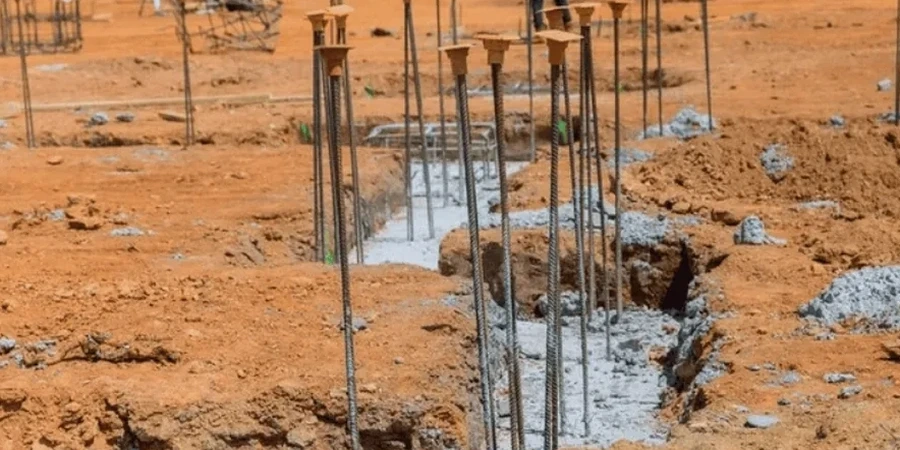
Local geotechnical conditions in Philadelphia
The pile hammer hits the steel and you hear it—a dull thud instead of the crisp ring you expect, and the blow count drops off. That sound means a boulder or an unexpected void down there, and in Philadelphia's glacial-outwash-influenced terrain, it happens more than people admit. Without a design that accounts for obstructions and variable refusal elevations, the contractor burns through budget on extended driving, pile tip damage, and splice delays. We've been called in after the fact to redesign pile layouts when a few piles refused on shallow rock while others kept going another 25 feet through a paleochannel. The deeper risk is structural: a pile group that settles differentially because half the tips bear on competent schist and half are friction piles in decomposed material that consolidates under load. That's why we specify pre-production test piles with instrumented load tests whenever the subsurface profile shows lateral variability exceeding 15% across the foundation footprint.
Our services
Our pile foundation design services cover the full engineering workflow, from initial subsurface characterization through construction-phase support. Each deliverable is stamped by a Pennsylvania-licensed professional engineer with deep experience in Mid-Atlantic geology.
Axial Capacity Analysis
Static analysis for driven piles and drilled shafts using both FHWA and AASHTO methods, calibrated to Philadelphia-specific soil parameters.
Lateral and Uplift Design
Evaluation of pile group response under wind, seismic, and earth pressure loading per ASCE 7-22 and IBC 2021 requirements.
Pile Load Test Programs
Development of instrumented static load test specifications, dynamic PDA monitoring plans, and interpretation of load-settlement curves.
Construction-Phase Support
Review of pile driving records, wave equation analysis for hammer selection, and field verification of bearing stratum elevations.
Q&A
What does pile foundation design typically cost for a Philadelphia project?
For a standard pile foundation design package including axial and lateral analysis, construction specifications, and load test program development, budgets generally range from US$1,860 to US$6,720 depending on the number of pile types, the complexity of the soil profile, and whether dynamic testing coordination is included. Large projects with multiple pile groups and instrumented load test oversight fall toward the upper end.
How does the Wissahickon Schist affect pile design in Northwest Philadelphia?
The Wissahickon Formation is a metamorphic bedrock with highly variable weathering depths. We typically core into it to determine the Rock Quality Designation (RQD) and unconfined compressive strength, then design the rock socket length based on the discontinuity spacing and the required end-bearing capacity. Refusal on shallow competent rock can reduce pile lengths significantly, but the transition zone between saprolite and fresh schist requires careful evaluation to avoid premature refusal during driving.
What pile types are most common for Philadelphia soil conditions?
Driven H-piles are widely used for end-bearing on rock or dense granular layers, especially in commercial construction. Drilled shafts or caissons are common where vibration concerns or access constraints exist. Micropiles work well for underpinning in tight Center City lots. The choice depends on the depth to bearing stratum, the presence of obstructions, and the allowable settlement for the structure—all factors we evaluate during the geotechnical investigation phase.