Philadelphia's geological backbone isn't just the hard Wissahickon Schist you hit in Manayunk; much of the city sits on the ancient alluvial deposits of the Coastal Plain, where the clays and silts can be deceptively problematic. These fine-grained soils, particularly the varved clays found in some low-lying areas, can swing from a solid to a plastic state with seemingly minor changes in moisture. When a contractor breaks ground in neighborhoods like Fishtown or near the Delaware River, the key question isn't just how dense the soil is, but how it will behave when wet. That's where precise Atterberg limits testing becomes indispensable. By defining the liquid limit and plastic limit of a sample, we help engineers predict settlement, shrink-swell potential, and overall constructability. Before you commit to a deep foundation design, correlating these results with an spt drilling program can provide a complete picture of the subsurface profile, ensuring your structural loads are matched to the ground's actual capacity.
In Philadelphia's humid climate, a plasticity index above 20 isn't just a number—it's a warning for foundation movement that standard density tests alone will miss.
Scope of work in Philadelphia
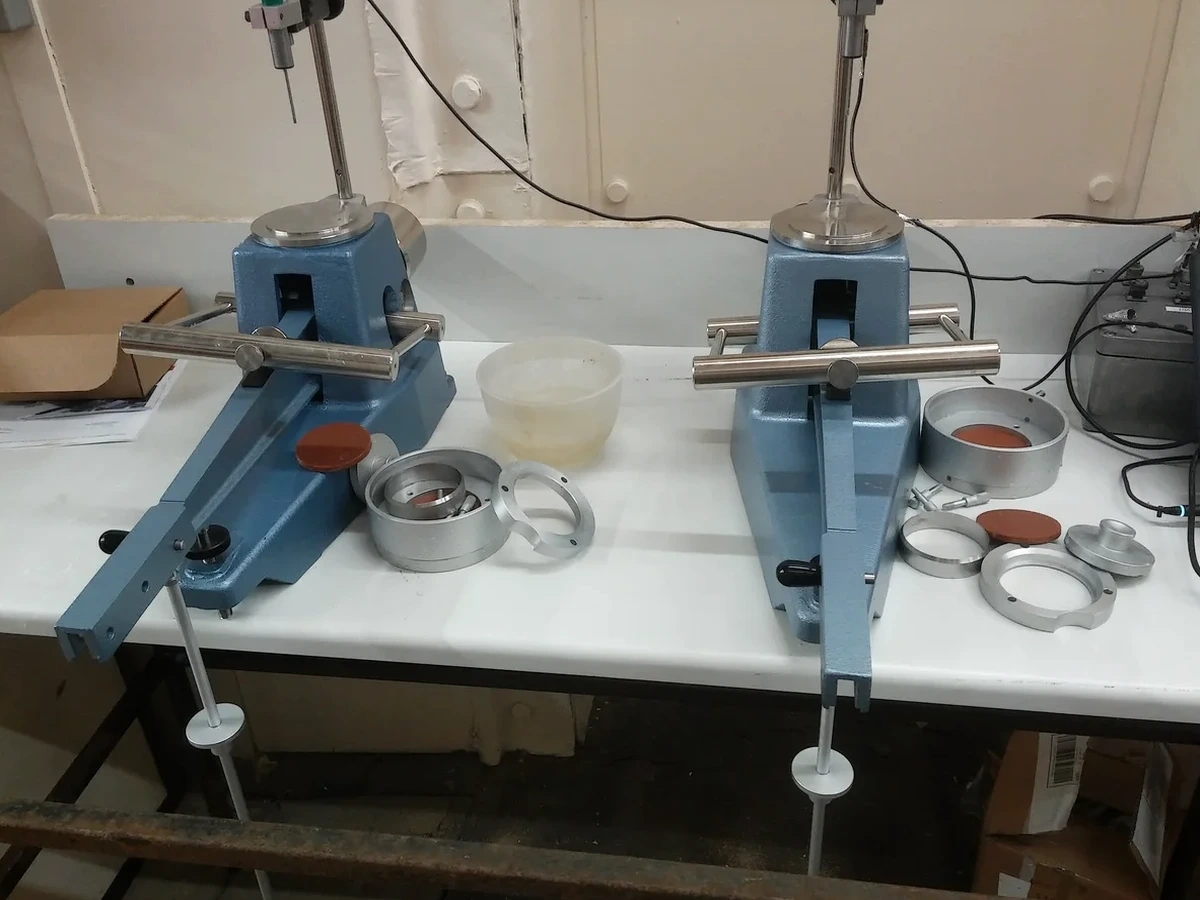
Field demonstration
Local geotechnical conditions in Philadelphia
We've seen the pattern too often in Philadelphia: a rowhouse developer excavates in Northern Liberties, a rainstorm hits, and the exposed clay subgrade turns into a slick, unstable paste. That's a direct consequence of ignoring the liquid limit. A soil with a high LL can lose all bearing capacity when saturated, leading to trench collapses or differential settlement under shallow footings. The real danger isn't just the construction delay; it's the long-term performance of the structure. If a soil's natural water content sits close to its plastic limit, seasonal wetting and drying cycles will cause volumetric changes that crack masonry walls and displace utilities. By running Atterberg limits early, we identify these risky silts and clays before they become change orders. The data allows us to recommend stabilization with portland cement or lime, and to integrate these findings with a liquefaction assessment if the site is in a seismic zone near the river, where fine-grained soils can lose strength during a tremor.
Our services
Our Philadelphia lab provides classification testing that goes beyond the basic number. We connect the Atterberg limits to real construction outcomes, offering a suite of services that form a cohesive engineering recommendation.
Comprehensive Atterberg Limits Package
A full suite including liquid limit (multi-point), plastic limit, and plasticity index determination. We provide a detailed report linking the PI to USCS classification and potential engineering hazards for your specific Philadelphia site.
Soil Stabilization Screenings
Using the Atterberg results, we perform lime and cement reactivity tests to design a stabilization mix that permanently reduces the plasticity of problematic Philadelphia clays, ensuring a workable and stable subgrade for pavements and slabs.
Q&A
What do the Atterberg limits actually tell me about my Philadelphia construction site?
They define the moisture contents at which your fine-grained soil changes from a solid to a semi-solid, plastic, and liquid state. For a builder in Philadelphia, the plastic limit and liquid limit are practical numbers—they predict how much water the ground can absorb before it loses strength. A high plasticity index means the soil will shrink when dry and swell when wet, which is a major factor in foundation cracking and pavement failure across the city's variable geology.
How much does an Atterberg limits test cost for a typical residential project?
For a standard residential project in Philadelphia, an Atterberg limits analysis typically falls in the range of US$60 to US$90 per sample. The final cost depends on the number of samples and whether you need additional correlative tests like sieve analysis or hydrometer testing to complete the classification. We recommend at least one test per distinct soil layer encountered during drilling.
How long does it take to get results back from the lab in Philadelphia?
Standard turnaround is 3 to 5 business days from sample delivery. The process requires oven-drying the soil and carefully re-wetting it to find the exact moisture boundaries, which can't be rushed without compromising accuracy. If your project has a critical deadline, we can often expedite results within 24 to 48 hours by coordinating with your site schedule.