Philadelphia sits at an interesting crossroads when it comes to seismic risk. While the city is not known as a major earthquake zone like the West Coast, the USGS still maps moderate hazard levels across southeastern Pennsylvania, and the 2011 Mineral, Virginia earthquake—felt strongly here in Center City—was a wake-up call for many structural engineers. The real concern in Philly isn't just ground shaking; it's what happens to the loose, saturated sands along the Delaware River waterfront and the artificial fill that underlies neighborhoods like Fishtown, Pennsport, and parts of University City. When we run a soil liquefaction analysis on a project site, we're looking at the interplay between groundwater depth, soil density from SPT blow counts, and the fines content obtained from grain size distribution tests. The city's geology shifts fast, from the Wissahickon schist up in Manayunk to the deep alluvial deposits near the Navy Yard, and that means no two liquefaction assessments look the same.
Liquefaction in Philadelphia is not a theoretical exercise—we have mapped loose saturated fills along the Delaware that match the same susceptibility profiles we see in Charleston and Boston.
Scope of work in Philadelphia
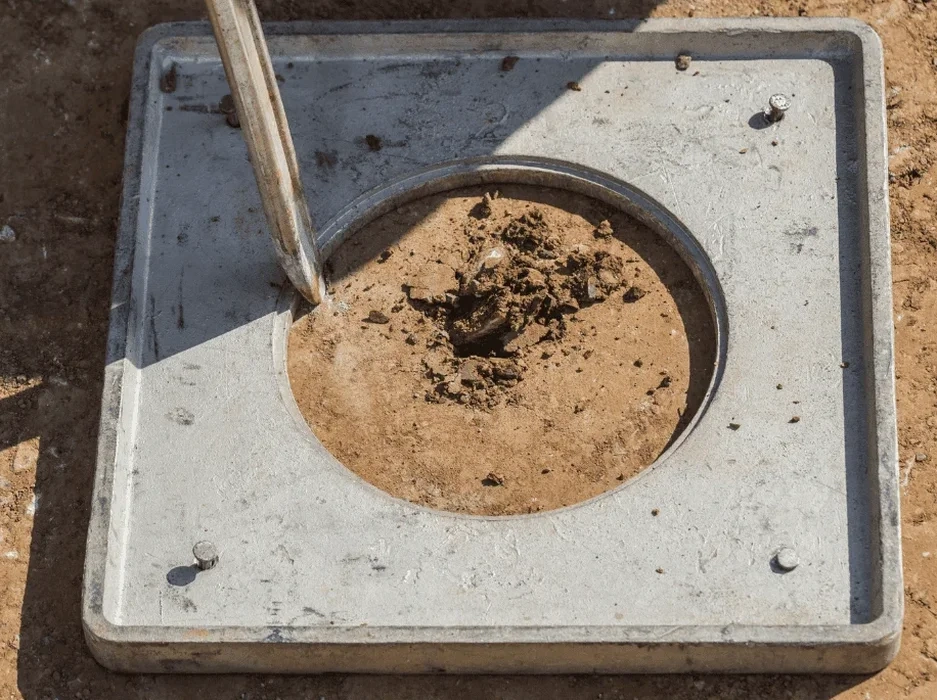
Field demonstration
Local geotechnical conditions in Philadelphia
Compare two sites just three miles apart in Philadelphia: a project in Northern Liberties, built on historic fill and old stream channel deposits, versus a site in West Mount Airy, sitting on residual soils from weathered Wissahickon schist. The first site has groundwater at 8 feet and clean sand layers we traced back to old Cohocksink Creek sedimentation; the second is dense silty sand with bedrock at 25 feet. The liquefaction risk is night and day. A developer who treats both sites the same is asking for trouble. At the Northern Liberties location, we calculated post-liquefaction settlements exceeding 2 inches under the design earthquake, enough to crack partition walls and misalign elevator rails. That kind of differential movement doesn't just cost money to repair—it can tie a project up in litigation for years. The risk compounds in areas like South Philadelphia east of Broad Street, where the fill is deeper and the water table historically higher. Ignoring a site-specific analysis here isn't just conservative engineering; it's a direct liability to the structural design and the project's insurability.
Our services
Our liquefaction assessment work in Philadelphia integrates field investigation, laboratory testing, and engineering analysis into a single deliverable that structural engineers can use directly in their foundation design. The scope of work depends on the site classification and the project's risk category, but most assignments include the following components.
SPT-Based Liquefaction Screening
We drill to depths of 50 to 80 feet using hollow-stem augers or mud rotary methods, performing standard penetration tests at 2.5-foot intervals. Blow counts are corrected for hammer energy, rod length, and overburden pressure per ASTM D6066, then used to calculate the factor of safety against liquefaction triggering using the Idriss and Boulanger procedure.
CPT and Seismic Cone Penetration Testing
For sites with complex stratigraphy—common in the Delaware River corridor—we deploy electric cone penetration testing with pore pressure measurement. The continuous tip resistance and friction ratio data let us identify thin liquefiable seams that SPT alone can miss. We also run seismic cone tests to measure shear wave velocity profiles for Site Class determination.
Post-Liquefaction Settlement and Lateral Spreading Analysis
Once the triggering analysis is complete, we estimate volumetric strain and settlement potential using the Ishihara and Yoshimine charts, and calculate lateral spreading displacement using empirical methods from Youd et al. These outputs feed directly into the structural engineer's assessment of foundation performance and differential movement tolerances.
Q&A
Is a liquefaction analysis required by the Philadelphia building code?
The Philadelphia Department of Licenses and Inspections enforces the IBC, which requires a liquefaction potential evaluation for structures in Seismic Design Categories C through F when the site class is E or F and the groundwater table is within 50 feet of grade. Many projects along the Delaware River and in areas with documented artificial fill fall under this requirement. The geotechnical engineer of record must submit a report addressing cyclic stress ratio, factor of safety, and anticipated settlement to obtain permit approval.
What is the typical cost of a soil liquefaction study in Philadelphia?
A complete liquefaction analysis in Philadelphia, including drilling two to three boreholes with SPT sampling, laboratory testing for grain size distribution and Atterberg limits, and the engineering report with triggering and settlement calculations, generally runs between US$2,530 and US$3,630. The final price depends on the depth of investigation, access constraints in dense urban areas like Center City, and whether supplementary CPT or geophysical surveys are required.
What soil types in Philadelphia are most susceptible to liquefaction?
The highest susceptibility is in loose, clean to slightly silty sands with SPT N-values below 15, saturated within the upper 30 to 40 feet. In Philadelphia, these conditions appear most frequently in the artificial fill and alluvial deposits along the Delaware River waterfront, in former stream valleys now buried under development, and in the hydraulically placed sands near the Navy Yard. Soils with more than 35 percent fines and measurable plasticity tend to be non-liquefiable, which is why we always run Atterberg limits alongside grain size analysis to confirm the classification.