Philadelphia's subsurface tells a complex story. The city sits on the fall line separating the hard Piedmont metamorphic rocks to the west from the soft Atlantic Coastal Plain sediments to the east. In neighborhoods like Manayunk, you might hit Wissahickon schist at three feet; over in South Philly, you're looking at fifty feet of compressible silt and organic clay before reaching anything competent. An exploratory test pit lets us see that transition firsthand. We expose the stratigraphy, identify buried demolition debris common in Old City, and sample the precise horizon where a footing will bear. Because Philadelphia's geologic map shows such abrupt changes over short distances—think the difference between Temple's campus and the Delaware riverfront—direct observation through a test pit removes the guesswork that borehole logs alone can leave behind.
When we combine the pit observations with a grain size analysis on the recovered samples, we can classify the soil per ASTM D2487 and verify whether that sandy layer is really a suitable bearing stratum or just a thin lens over softer material. This combination of visual inspection and lab confirmation forms the backbone of a reliable IBC Chapter 18 geotechnical investigation for structures across the city.
In Philadelphia, a test pit reveals what the 1910 USGS map only suggests: the real contact between fill and bedrock, exposed and undeniable.
Scope of work in Philadelphia
Every pit is logged by a geotechnical engineer who understands Philly's unique soil vernacular: 'cinder fill' from the old gasworks, 'river dredge' from the Delaware expansion, or the sticky red-brown residual silt derived from weathered gneiss in the Northwest. We measure infiltration rates in the bottom of the pit for stormwater design—critical for meeting Philadelphia Water Department requirements—and collect undisturbed block samples when we need to run a triaxial shear test on the sensitive clays found along the Schuylkill floodplain. The pit becomes a temporary field lab, and the data we extract from it often changes the foundation design before the concrete is ever ordered.
Local geotechnical conditions in Philadelphia
What we see too often in Philadelphia is a contractor starting excavation in what they assume is 'just dirt' and hitting an unmarked 48-inch brick sewer or a forgotten fuel oil tank from the 1920s. The city's underground is a palimpsest of three centuries of construction, demolition, and reburial. An exploratory test pit, dug carefully under PA One Call clearance, is the only sure way to verify utility conflicts and characterize the fill before a full-scale excavation begins.
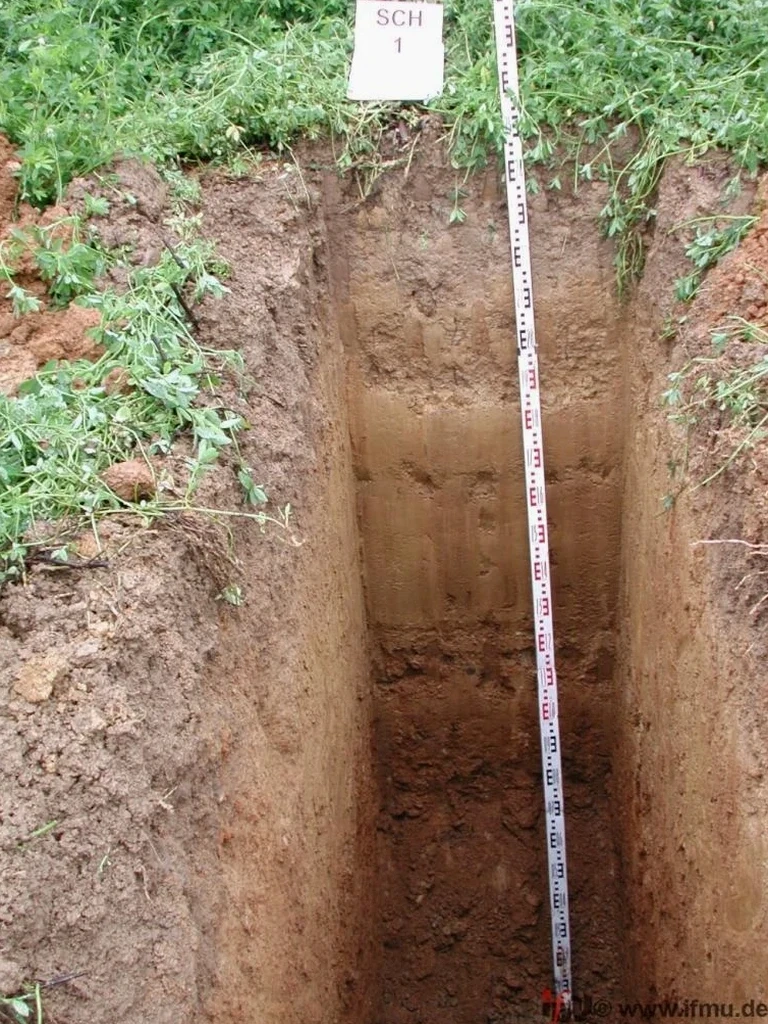
We've watched retaining wall designs fail because the designer assumed a friction angle from a textbook and never saw the greasy, slickensided clay that actually exists five feet down. When we open a pit, the soil structure—its fissures, its moisture, its layering—is right there in daylight. That direct observation eliminates the risk of misinterpreting a split-spoon sample from an SPT boring, where a thin sand seam might be missed entirely. For sites in liquefaction-prone areas near the Delaware River, the pit also lets us visually identify the loose, saturated sands that require further seismic testing before construction.
Our services
Our test pit program in Philadelphia is never a one-size-fits-all exercise. The geology shifts block by block, and the service package adapts to the specific question: are we checking bearing capacity for a foundation, mapping contamination for a Phase II ESA, or locating a sewer connection depth? Below are the core exploration services we deliver across the city.
Structural Foundation Pits
Excavated to the proposed footing depth plus one bench for safety, these pits target bearing stratum verification. We log the soil, perform hand penetrometer tests, and collect samples for laboratory strength testing. For row home additions in Philadelphia's historic districts, we often coordinate with the structural engineer to confirm the depth to competent material before the final foundation drawings are sealed.
Stormwater Infiltration Pits
Philadelphia Water Department regulations demand on-site infiltration testing for many new developments. We excavate to the planned infiltration bed depth, protect the sidewalls from smearing, and perform double-ring infiltrometer tests. The results feed directly into the stormwater management report, and we sample the soil for grain-size correlation to predict long-term infiltration rates.
Environmental and Utility Clearance Pits
In Philadelphia's brownfield corridors—from the former industrial reaches of Kensington to the refinery-adjacent sites in South Philly—we combine test pitting with photoionization detector screening and waste characterization. These pits locate abandoned tanks, define the limits of contaminated fill, and verify utility depths before directional drilling or foundation excavation begins.
Q&A
What is the typical cost range for an exploratory test pit in Philadelphia?
For a standard test pit in a Philadelphia residential or commercial site with reasonable access, the cost typically ranges from US$550 to US$820. This includes mobilization of the excavator, a full day of engineering observation, soil logging per ASTM D2487, infiltration testing if required, and the final report with recommendations. Sites with very limited access, deep fill, or the need for traffic control on city streets may push the upper end of that range.
How deep can you excavate a test pit in Philadelphia?
With a full-size backhoe on an open site, we can reach 14 to 16 feet before benching becomes impractical. In tight row home rear yards where only a compact excavator fits, we typically limit the depth to 10 or 11 feet. The limiting factors are OSHA's sloping requirements—Type C soil requires a 1.5H:1V slope—and the presence of groundwater, which in South Philadelphia can appear as shallow as 6 feet below grade.
Do I need a permit to dig a test pit in Philadelphia?
A test pit itself does not usually require a separate excavation permit if it is part of a geotechnical investigation, but you must call PA One Call (811) at least three business days before digging to mark utilities. If the pit is in the public right-of-way—say, in a street or sidewalk in Center City—you will need a street opening permit from Philadelphia Streets Department. We handle the coordination and ensure the site is properly restored with temporary cold patch or permanent concrete replacement.
What can a test pit tell me that a boring cannot?
A boring gives you a two-inch-diameter view of the subsurface; a test pit gives you an entire wall. In Philadelphia's urban fill, we often find buried structures, brick rubble zones, and old foundations that a drill rig would either deflect around or produce an uninterpretable sample from. The pit lets us see soil structure—fissures, slickensides, root penetration—measure infiltration directly, and collect large undisturbed block samples for shear strength testing that SPT samples simply cannot provide.
How soon can you mobilize for a test pit investigation?
After the utility markout clears—which takes 3 business days per PA One Call—we can typically have the excavator and engineer on site within a week. For time-sensitive foundation design projects in Philadelphia, we have worked on a 5-day turnaround from the initial call to the final report in hand. The key is getting on the schedule early and having the access confirmed before the excavator arrives.