Philadelphia's subsurface tells a story written in two distinct geologic chapters. The Coastal Plain sediments south of the Fall Line—interbedded sands, silts, and clays deposited over millions of years—transition abruptly into the weathered Wissahickon Schist and gneiss of the Piedmont province just north of City Avenue. This duality, combined with a water table that can sit within six feet of grade in areas like South Philly, creates a geotechnical environment where traditional split-spoon sampling often struggles to capture the continuous stratigraphy needed for settlement analysis. When we need to map thin liquefiable sand lenses beneath the Delaware River waterfront or characterize the soft organic silts common near the historic tidal marshes, the CPT cone penetration test provides a near-continuous profile of tip resistance, sleeve friction, and pore pressure that discrete SPT intervals simply cannot match. It is a tool that turns subtle changes in soil behavior into actionable engineering parameters before the first shovel breaks ground.
In Philadelphia's interlayered Coastal Plain deposits, a single CPT sounding can resolve thin sand seams that control liquefaction risk—detail that standard penetration tests routinely miss.
Scope of work in Philadelphia
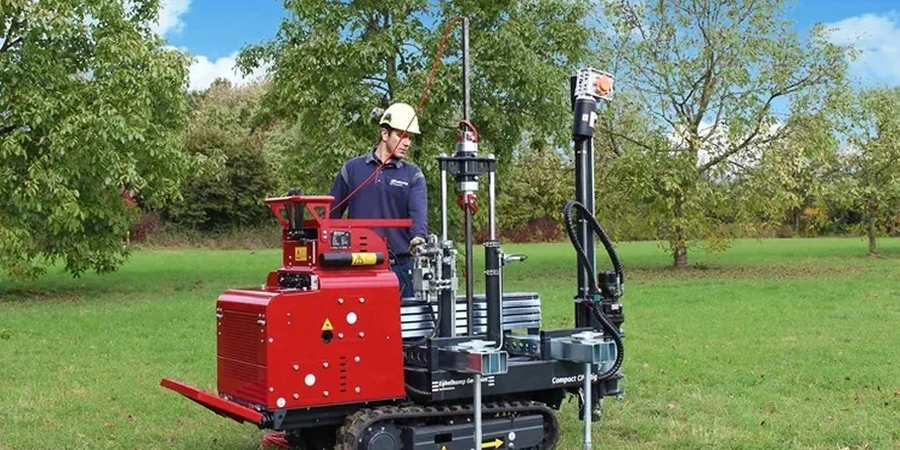
Local geotechnical conditions in Philadelphia
Philadelphia's industrial legacy and centuries of land reclamation have left a patchwork of undocumented fill, buried foundations, and former stream channels now hidden beneath streets and parking lots. The city expanded by filling in Dock Creek and modifying the Schuylkill shoreline, which means many development parcels sit on heterogeneous materials where differential settlement can damage adjacent historic structures. A CPT program that skips dissipation testing in these fill zones risks misclassifying loose rubble as competent ground, leading to unexpected settlements. We have seen cases along the Delaware Avenue corridor where a continuous CPT profile was the only practical way to identify buried timber piles from 19th-century wharfs—features that rotary drilling would have missed entirely. When the cone encounters an abrupt change from dense sand to very soft clay at a depth where no geologic boundary should exist, it often signals a former marsh or infilled basin that requires a fundamental redesign of the foundation scheme.
Our services
Our Philadelphia-area CPT services are structured to deliver the specific subsurface data that structural engineers and excavation designers require, from pre-consolidation stress estimates to seismic site class determination.
Piezocone Penetration Testing (CPTu)
Continuous profiling with pore pressure measurement for accurate soil behavior type classification, consolidation analysis, and groundwater regime characterization in Philadelphia's Coastal Plain sediments.
Seismic Cone Penetration Testing (SCPTu)
Downhole shear wave velocity measurement integrated with CPTu data for IBC seismic site classification, liquefaction triggering analysis per Seed & Idriss methodologies, and soil-structure interaction modeling for high-rise foundations.
Q&A
What is the typical cost range for a CPT sounding in the Philadelphia area?
CPT soundings in the Philadelphia region typically range from US$150 to US$210 per meter, depending on site accessibility, traffic control requirements, and whether piezocone or seismic cone modules are needed. Mobilization costs and any pre-drilling through obstructions like urban fill are quoted separately after reviewing the site location and subsurface conditions.
How deep can CPT push in Philadelphia's Piedmont soils?
In the Piedmont province north of the Fall Line, refusal on weathered Wissahickon Schist typically occurs between 15 and 40 feet, depending on the degree of weathering and the presence of corestones. In the Coastal Plain south of the city, we routinely reach depths of 80 to 100 feet in sands and clays before encountering the crystalline basement, provided no thick gravel layers are present.
Does ASTM D5778 require dissipation testing during CPT?
ASTM D5778-20 does not mandate dissipation tests, but they are strongly recommended whenever pore pressure data will be used for consolidation analysis or when evaluating drainage conditions for liquefaction assessment. We perform dissipation tests at intervals where the pore pressure response indicates a significant change in soil permeability, holding the cone stationary and recording pressure decay until at least 50 percent of the equilibrium value is reached.
Can CPT data replace soil borings for foundation design in Philadelphia?
CPT provides continuous stratigraphic detail and direct engineering parameters that complement, but do not fully replace, soil borings. Philadelphia's urban fill often contains brick, cobbles, and demolition debris that can damage cone equipment, and borings are still needed for soil sampling, laboratory testing, and rock coring in Piedmont sites. A combined exploration program using CPT for stratigraphic resolution and targeted borings for material verification is the standard practice we recommend.
How is CPT data used for liquefaction analysis under ASCE 7?
Under ASCE 7-22, CPT-based liquefaction triggering procedures use normalized tip resistance and friction ratio to estimate the cyclic resistance ratio of each soil layer. We apply the Robertson and Wride method, coupling SBTn classification with the fines content correction, to calculate factors of safety against liquefaction at discrete depth intervals. The continuous CPT record is particularly valuable for identifying thin liquefiable layers that could cause lateral spreading along the Delaware or Schuylkill waterfronts. More info.